
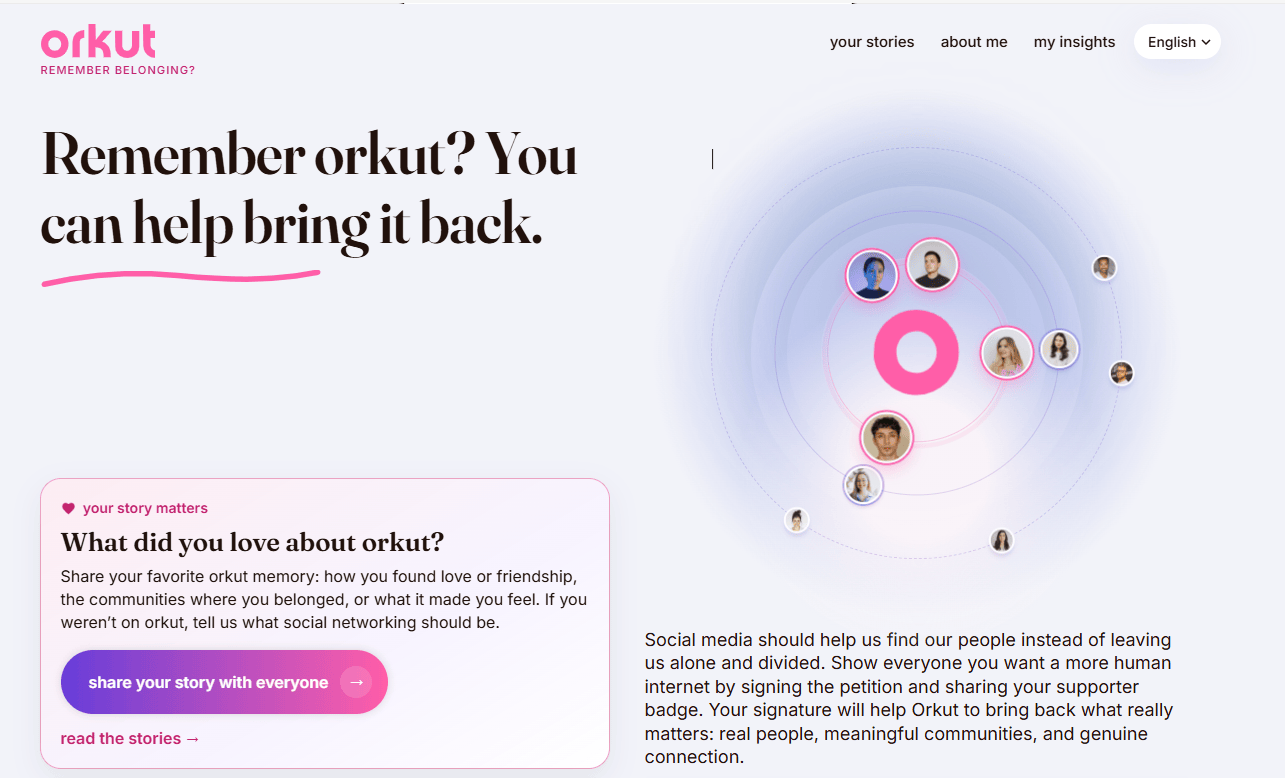
Orkut: When Community Connections Were No Longer Enough.

How does a social networking platform go from attracting millions of users to becoming almost forgotten? That is what makes Orkut’s story so interesting.

Launched by Google in 2004, Orkut became one of Brazil’s most popular social networking platforms. Facebook also launched in 2004, but the two platforms eventually followed very different paths.

Having used Facebook during its earlier years, I’ve seen social networking evolve from connecting with friends to sharing experiences and interacting with brands. That evolution shows how consumer expectations influence a platform’s success.

Orkut’s experience shows how quickly a platform can lose touch with changing consumer expectations.

Orkut Understood the Power of Community

One of Orkut’s greatest strengths was making people feel connected. Initially, membership was invitation-only, creating a sense of exclusivity. Google’s reputation also helped attract technology professionals and students.

Once inside, users could join communities based on schools, workplaces, friendships, and shared interests. According to the textbook case study, Orkut developed approximately 1.5 million communities within its first year.

From a marketing perspective, Orkut successfully attracted a defined audience, encouraged participation, and created reasons for users to return.

Orkut wasn’t simply building a social network. It was creating a sense of belonging.

Consumers Became Part of the Conversation

Orkut demonstrated how social media could change the relationship between businesses and consumers.

Members exchanged opinions, recommended products, and participated in discussions. Rather than simply receiving advertising messages, they helped shape conversations and influence purchasing decisions.

This represented a shift away from traditional one-way marketing toward consumer participation.

Think about how often people read customer reviews, watch product demonstrations, or ask friends for recommendations before purchasing something. Orkut encouraged similar interactions through its communities.

Research on the history of social networking sites explains how online connections and shared interests helped shape early digital communities.

For marketers, the lesson is that consumers want opportunities to participate, not simply receive promotional messages.

Why Orkut Became So Popular in Brazil

Orkut’s popularity in Brazil illustrates how strongly culture influences social media behavior.

Brazilian consumers embraced digital communication, social connections, and opportunities to exchange information through online communities. Orkut’s structure complemented these interests.

The textbook case study also explains that Brazilian consumers frequently researched products through social networking sites and valued recommendations from online contacts.

For businesses, this created opportunities to develop relationships through community participation rather than relying exclusively on traditional advertising.

However, understanding cultural preferences is not a one-time accomplishment.

As Brazilian consumers became increasingly interested in online video, convenient photo sharing, and more interactive digital experiences, Orkut struggled to keep pace.

Facebook Evolved While Orkut Struggled

Both Facebook and Orkut launched in 2004, but they responded differently as social media evolved.

Facebook continued evolving through photo sharing, videos, and eventually Facebook Live, allowing users to participate in broadcasts and interact in real time. Although Facebook Live launched after Orkut closed in 2014, it illustrates how Facebook continued developing new ways to engage its audience. Orkut, meanwhile, struggled with technical limitations and changing consumer expectations.

Having watched Facebook evolve, I’ve learned that convenience influences customer loyalty. Even satisfied users may leave when a platform no longer meets their expectations.

In 2014, Google announced Orkut’s closure, explaining that its other social platforms had experienced greater growth.

Orkut’s decline demonstrates that customer loyalty depends on more than familiarity. Consumers need reasons to keep coming back.

What Today’s Brands Can Learn From Orkut
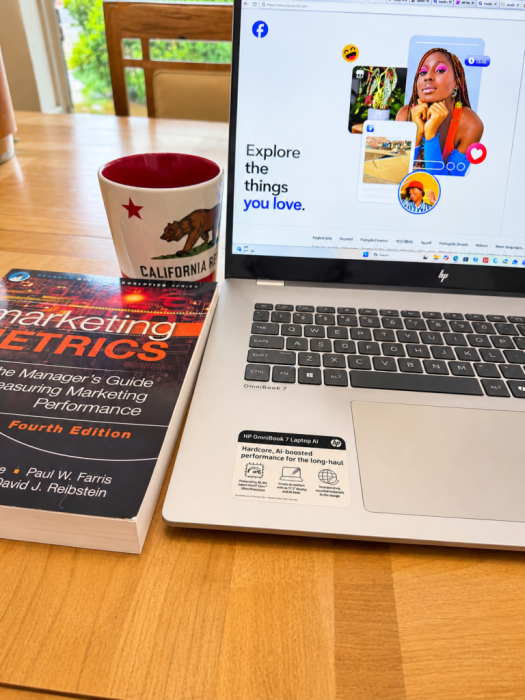
Coffee, Marketing Metrics textbook, and laptop displaying Facebook on a wooden table.
Photo by the author

Orkut’s experience offers several lessons for businesses developing social media strategies:

Orkut’s experience also highlights the importance of customer retention. Bendle et al. (2021) address retention as a measure of marketing performance in Chapter 5 of Marketing Metrics. Although Orkut attracted millions of users, maintaining their engagement was another challenge. Monitoring retention and participation could have helped the platform recognize changing consumer expectations before users moved to competitors.

  • Understand your audience. Recognize cultural preferences and changing consumer behavior.
  • Encourage participation. Create opportunities for conversations and shared experiences.
  • Listen to feedback. Monitor customer concerns and engagement trends to identify problems before they affect loyalty.
  • Keep evolving. Technology and consumer expectations continue to change.
  • Build relationships across platforms. Avoid relying entirely on one social networking service.

Successful social media marketing requires continuous attention to the consumer experience, not simply attracting followers.

Final Thoughts

Orkut’s rise and decline demonstrate how important community engagement and customer experience are to social media marketing.

Interestingly, Orkut’s current website invites visitors to share memories and support a possible return. Although a relaunch is not guaranteed, the message suggests that meaningful connections still matter.

For me, the lesson comes back to customer experience. Building a community is important, but keeping people engaged requires listening, adapting, and improving.

Could Orkut succeed today by combining its original sense of community with the features consumers now expect?


Weixin: When Convenience, Culture, and Technology Come Together

How understanding consumer needs can turn a social media platform into an everyday experience.

What if one app could handle your messages, news, shopping, payments, and even your ride home?

That is exactly what Weixin offered its users. Rather than becoming another social media application, Weixin became part of everyday life. What caught my attention was how the platform understood people’s needs and fit into their daily routines.

WeChat welcome screen displayed on the author’s smartphone. Screenshot by the author; original artwork from the WeChat application.

Understanding What Consumers Really Want

Launched in China in 2011, Weixin, known internationally as WeChat, attracted more than 300 million active users by 2014, according to our Chapter 5 case study. Its early audience consisted primarily of young, urban smartphone users who valued convenience and accessibility.

Rather than limiting itself to messaging, Weixin brought communication, shopping, news, payments, and transportation into one application.

Weixin did not necessarily create new consumer needs. It recognized everyday activities and found ways to make them easier.

This connects to uses and gratifications theory, discussed in Chapter 5 of Strategic Social Media: From Marketing to Social Change. People choose media based on what they want to accomplish, whether that involves finding information, communicating, or entertainment.

For marketers, understanding those motivations is just as important as knowing who their customers are.

When Convenience Becomes Part of the Experience

One feature that stood out to me was Weixin’s voice messaging. Instead of typing Chinese characters on a smartphone, users could hold down a button and speak. The application also allowed people to read articles and access services without constantly switching between platforms.

These features might seem simple, but they removed unnecessary steps from everyday activities.

This relates to self-efficacy, or a person’s confidence in their ability to perform a task. When technology feels manageable, people are more likely to use it.

Businesses sometimes overlook how small improvements can make a meaningful difference in customer experience.

How Personal Interests Shape Engagement

When thinking about how platforms respond to individual interests, Pinterest comes to mind.

Pinterest allows users to explore personal interests, from home decorating to travel, while discovering new ideas along the way.

Although Pinterest and Weixin serve different purposes, both show how understanding audience motivations can influence engagement.

Pinterest often begins with inspiration, while Weixin focuses more on helping people accomplish everyday activities. In both cases, the experience becomes valuable when it reflects what users want.

It also makes me wonder how often our online decisions are influenced by what we originally searched for versus what a platform recommends.

Bringing Culture Into the Digital Experience

Perhaps the most interesting part of Weixin’s strategy was its 2014 Qiang Hongbao, or Red Envelope campaign.

Giving money in red envelopes is a Chinese tradition associated with holidays and celebrations. Weixin introduced a digital version that allowed users to send money to family and friends through the application.

The company added excitement by randomly distributing money among recipients. According to the case study, nearly five million people participated, sending approximately 20 million virtual red envelopes.

What made this campaign effective was its connection to an existing cultural tradition.

Weixin wasn’t asking people to abandon something meaningful. It offered another way to participate.

This demonstrates how emotional engagement can connect technology with family, culture, and entertainment.

However, what appeals to one audience may not have the same meaning to another. Marketers need to understand cultural differences rather than assume that one successful strategy will work everywhere.

Are Convenience and Loyalty the Same Thing?

Weixin continued expanding its services, including taxi reservations through Didi Taxi. Users could arrange transportation and make payments without leaving the application.

This helped Weixin become more than a place to communicate. It became a practical tool people could incorporate into their daily routines.

But this raises a question I think marketers should consider: Does convenience create genuine customer loyalty, or does it simply create habits?

Consumers may repeatedly use an application because it is familiar, not necessarily because it provides the best possible experience.

That distinction matters. A company should want customers to return because they value the experience, not simply because switching to something else feels inconvenient.

Final Thoughts

Weixin’s success demonstrates how convenience, culture, and technology can work together when a company understands its audience.

Could Weixin achieve the same success in the United States? I think its convenience would appeal to American consumers, but changing established habits and building trust could be challenging.

For me, successful social media marketing is about creating meaningful customer experiences rather than simply introducing new features or attracting followers. Not every business needs an all-in-one application, but every business needs to understand what motivates its customers.

What about you? Do you continue using your favorite applications because they provide the best experience, or because using them has simply become a habit?

The Breast Cancer Meme: When Going Viral Isn’t Enough

Social media can get people talking, but is that enough to create meaningful change?

A Facebook Status That Got Everyone Talking

Imagine logging onto Facebook and seeing your friends posting random colors like black, pink, or purple without any explanation. Naturally, you would be curious.

That curiosity helped make the Breast Cancer Meme a viral social media phenomenon. Women were encouraged to post the color of their bras as their Facebook status while keeping the meaning a secret from men. Other versions involved suggestive statements about where women placed their purses.

The intention was to raise breast cancer awareness, but the campaign raises an important question: Does participating in a social media trend mean we are actually supporting the cause behind it?

The Chapter 4 case study in Strategic Social Media: From Marketing to Social Change illustrates the difference between spreading a message and inspiring meaningful action (Mahoney & Tang, 2017).

Why Did the Meme Go Viral?

Interestingly, something so simple generated so much attention.

Participants did not need to donate money, attend an event, or share educational information. They only had to update their Facebook status.

The campaign combined curiosity, humor, personalization, and social connections. People wanted to participate because their friends were participating, and the secrecy made others curious.

This demonstrates diffusion, a concept discussed by Mahoney and Tang, where messages spread through social networks as individuals share content with others.

From a marketing perspective, the campaign successfully encouraged user participation without requiring a significant investment of time or resources.

When Participation Falls Short of Action

One of my biggest concerns about the campaign is that participants could feel they were supporting breast cancer awareness without actually learning anything about the disease.

The campaign encouraged people to share information about themselves rather than information that could help someone affected by breast cancer.

This is where cyberactivism and mobilization become important.

Cyberactivism uses online platforms to promote social causes, but mobilization should encourage people to take meaningful steps toward supporting those causes.

The Breast Cancer Meme succeeded at getting people involved online, but it offered few opportunities to translate that participation into real-world action.

I also question whether sexualizing the campaign distracted from its intended purpose. Humor can attract attention, but when dealing with a serious health issue, the message should remain respectful and informative.

Another concern I have about the campaign is that it deliberately excluded men, even though breast cancer can affect them too. This issue is particularly meaningful to me because I once encountered a man with breast cancer who struggled to access medical care. At the time, the state’s breast and cervical cancer program provided coverage opportunities for eligible women but not men. He earned too much to qualify for other state-funded medical assistance and did not have health insurance. His situation showed me how easily men with breast cancer could be overlooked, not only in awareness campaigns but also when trying to access treatment. Instead of excluding men, the campaign could have encouraged them to recognize warning signs and seek medical attention. Awareness should extend beyond recognizing a disease to understanding who it affects and the barriers people face in receiving care. According to the Centers for Disease Control and Prevention, men can develop breast cancer, although it is much less common than in women.

Turning Awareness Into Meaningful Engagement

If I were developing this campaign, I would keep the creative approach that encouraged people to participate but connect it to a more meaningful purpose.

For example, I would encourage participants to:

  • Learn: Share reliable information about breast cancer risks, symptoms, and screening.
  • Act: Support a breast cancer organization through donations, volunteering, or community events.
  • Connect: Share resources and personal experiences that help others understand the impact of the disease.

Organizations such as Susan G. Komen provide educational information and opportunities for individuals to get involved.

I believe the campaign could have been more effective by directing its audience toward these types of resources rather than relying on secrecy to maintain interest.

Beyond Awareness: Making a Real Difference

The Breast Cancer Meme shows how social media attracts attention, but meaningful campaigns must demonstrate authenticity and commitment to those affected.

For me, the success of a social media campaign should not be measured only by how many people participate, but by what that participation accomplishes.

Going viral can start a conversation, but meaningful change requires education, inclusion, and action.

What do you think?

Have you ever encountered a breast cancer awareness campaign on social media that changed your perspective or encouraged you to have a conversation about breast cancer?

I’d love to hear about your experience in the comments.

Featured image: Original photograph by the author; modified using ChatGPT (OpenAI, 2026).