
How does a social networking platform go from attracting millions of users to becoming almost forgotten? That is what makes Orkut’s story so interesting.
Launched by Google in 2004, Orkut became one of Brazil’s most popular social networking platforms. Facebook also launched in 2004, but the two platforms eventually followed very different paths.
Having used Facebook during its earlier years, I’ve seen social networking evolve from connecting with friends to sharing experiences and interacting with brands. That evolution shows how consumer expectations influence a platform’s success.
Orkut’s experience shows how quickly a platform can lose touch with changing consumer expectations.
Orkut Understood the Power of Community
One of Orkut’s greatest strengths was making people feel connected. Initially, membership was invitation-only, creating a sense of exclusivity. Google’s reputation also helped attract technology professionals and students.
Once inside, users could join communities based on schools, workplaces, friendships, and shared interests. According to the textbook case study, Orkut developed approximately 1.5 million communities within its first year.
From a marketing perspective, Orkut successfully attracted a defined audience, encouraged participation, and created reasons for users to return.
Orkut wasn’t simply building a social network. It was creating a sense of belonging.
Consumers Became Part of the Conversation
Orkut demonstrated how social media could change the relationship between businesses and consumers.
Members exchanged opinions, recommended products, and participated in discussions. Rather than simply receiving advertising messages, they helped shape conversations and influence purchasing decisions.
This represented a shift away from traditional one-way marketing toward consumer participation.
Think about how often people read customer reviews, watch product demonstrations, or ask friends for recommendations before purchasing something. Orkut encouraged similar interactions through its communities.
Research on the history of social networking sites explains how online connections and shared interests helped shape early digital communities.
For marketers, the lesson is that consumers want opportunities to participate, not simply receive promotional messages.
Why Orkut Became So Popular in Brazil
Orkut’s popularity in Brazil illustrates how strongly culture influences social media behavior.
Brazilian consumers embraced digital communication, social connections, and opportunities to exchange information through online communities. Orkut’s structure complemented these interests.
The textbook case study also explains that Brazilian consumers frequently researched products through social networking sites and valued recommendations from online contacts.
For businesses, this created opportunities to develop relationships through community participation rather than relying exclusively on traditional advertising.
However, understanding cultural preferences is not a one-time accomplishment.
As Brazilian consumers became increasingly interested in online video, convenient photo sharing, and more interactive digital experiences, Orkut struggled to keep pace.
Facebook Evolved While Orkut Struggled
Both Facebook and Orkut launched in 2004, but they responded differently as social media evolved.
Facebook continued evolving through photo sharing, videos, and eventually Facebook Live, allowing users to participate in broadcasts and interact in real time. Although Facebook Live launched after Orkut closed in 2014, it illustrates how Facebook continued developing new ways to engage its audience. Orkut, meanwhile, struggled with technical limitations and changing consumer expectations.
Having watched Facebook evolve, I’ve learned that convenience influences customer loyalty. Even satisfied users may leave when a platform no longer meets their expectations.
In 2014, Google announced Orkut’s closure, explaining that its other social platforms had experienced greater growth.
Orkut’s decline demonstrates that customer loyalty depends on more than familiarity. Consumers need reasons to keep coming back.
What Today’s Brands Can Learn From Orkut

Orkut’s experience offers several lessons for businesses developing social media strategies:
Orkut’s experience also highlights the importance of customer retention. Bendle et al. (2021) address retention as a measure of marketing performance in Chapter 5 of Marketing Metrics. Although Orkut attracted millions of users, maintaining their engagement was another challenge. Monitoring retention and participation could have helped the platform recognize changing consumer expectations before users moved to competitors.
- Understand your audience. Recognize cultural preferences and changing consumer behavior.
- Encourage participation. Create opportunities for conversations and shared experiences.
- Listen to feedback. Monitor customer concerns and engagement trends to identify problems before they affect loyalty.
- Keep evolving. Technology and consumer expectations continue to change.
- Build relationships across platforms. Avoid relying entirely on one social networking service.
Successful social media marketing requires continuous attention to the consumer experience, not simply attracting followers.
Final Thoughts
Orkut’s rise and decline demonstrate how important community engagement and customer experience are to social media marketing.
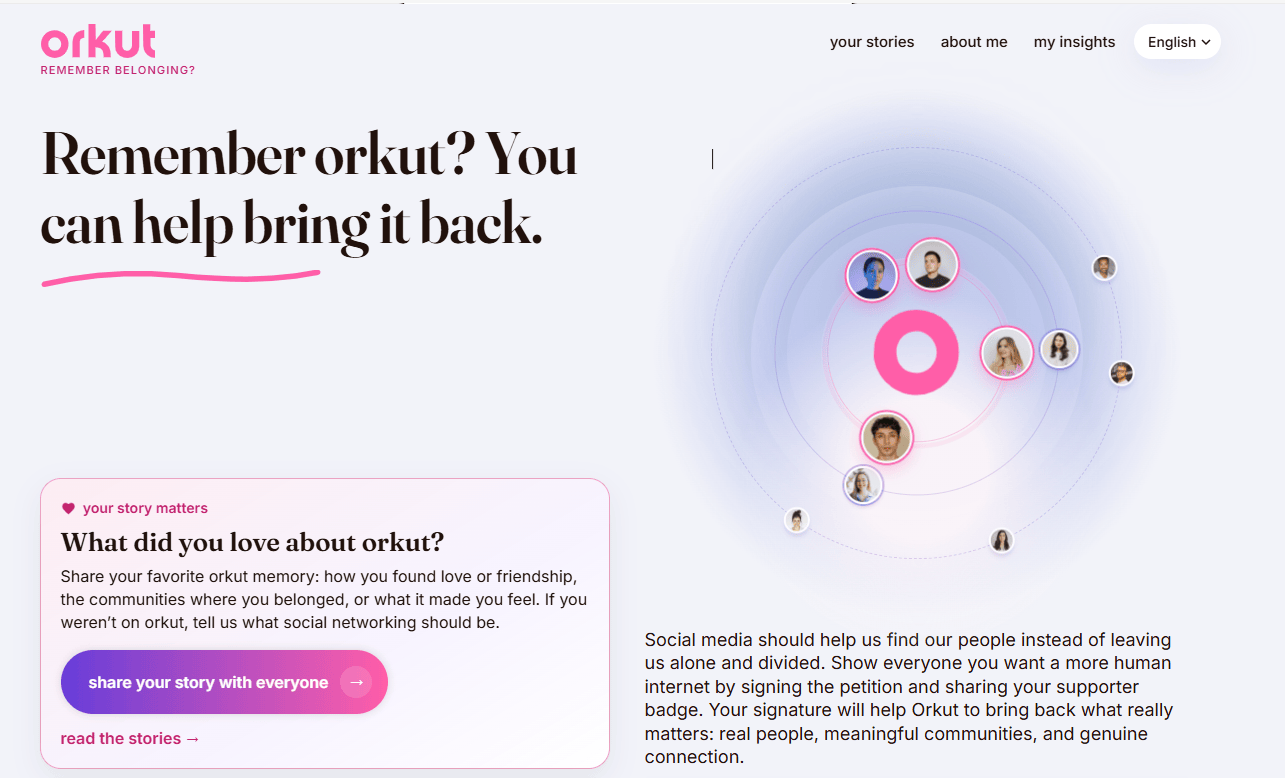
Interestingly, Orkut’s current website invites visitors to share memories and support a possible return. Although a relaunch is not guaranteed, the message suggests that meaningful connections still matter.
For me, the lesson comes back to customer experience. Building a community is important, but keeping people engaged requires listening, adapting, and improving.
Could Orkut succeed today by combining its original sense of community with the features consumers now expect?